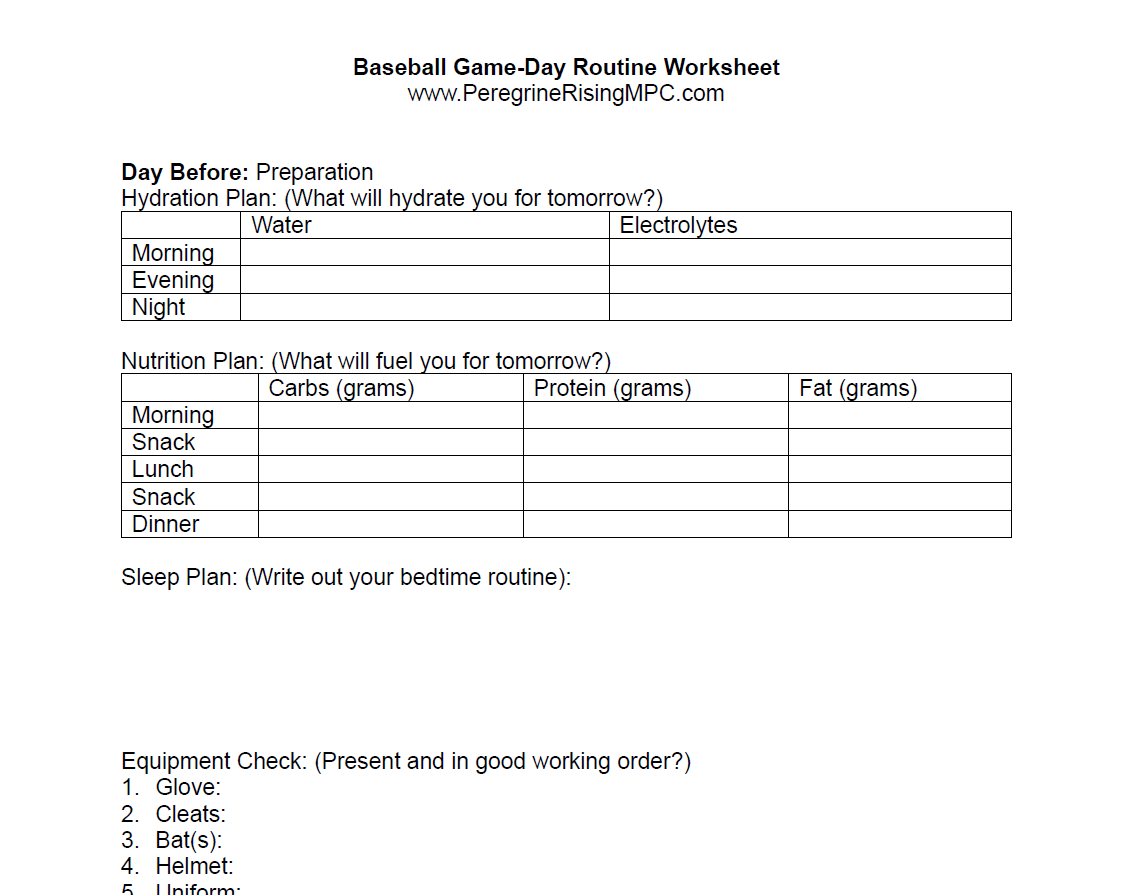
Athletes / Teams that volunteer in their community can save up to 10% on training! E-mail us to learn more!
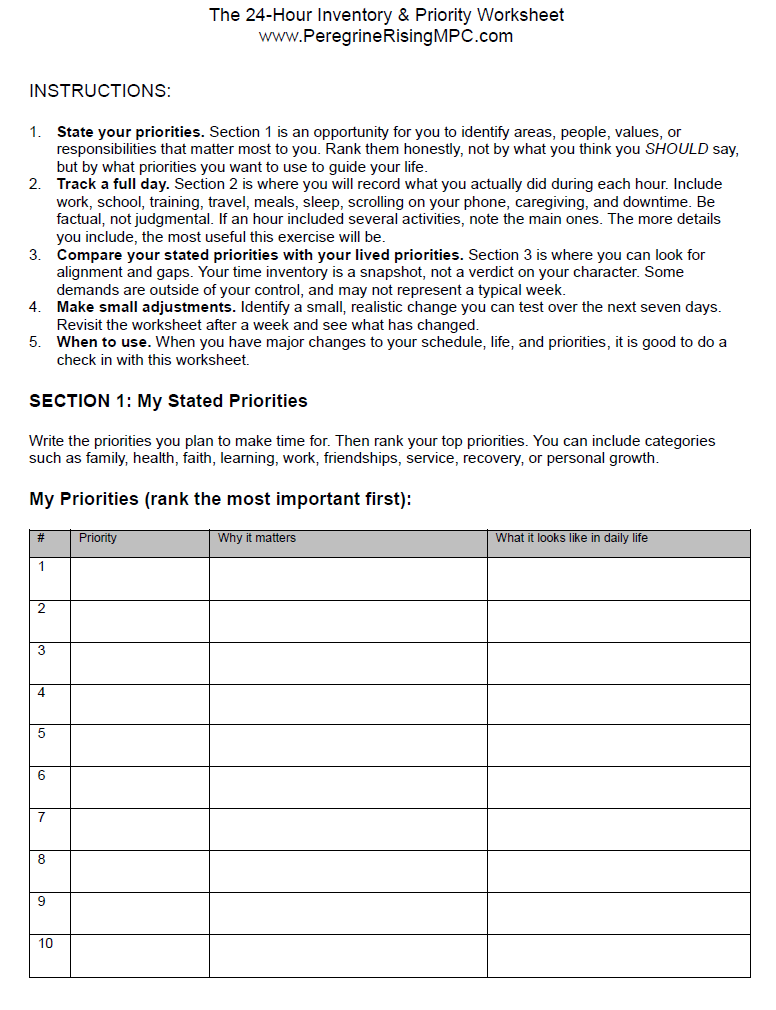
Stated priorities don’t always line up with lived priorities. Sometimes we understand the choices we are making are hindering our goals, but many times it isn’t so clear. This is a simple worksheet to help you define your priorities and then compare them to your lived priorities through a 24-hour inventory. Make sure you take time to work through the journal prompts at the end to reflect and make the right changes.
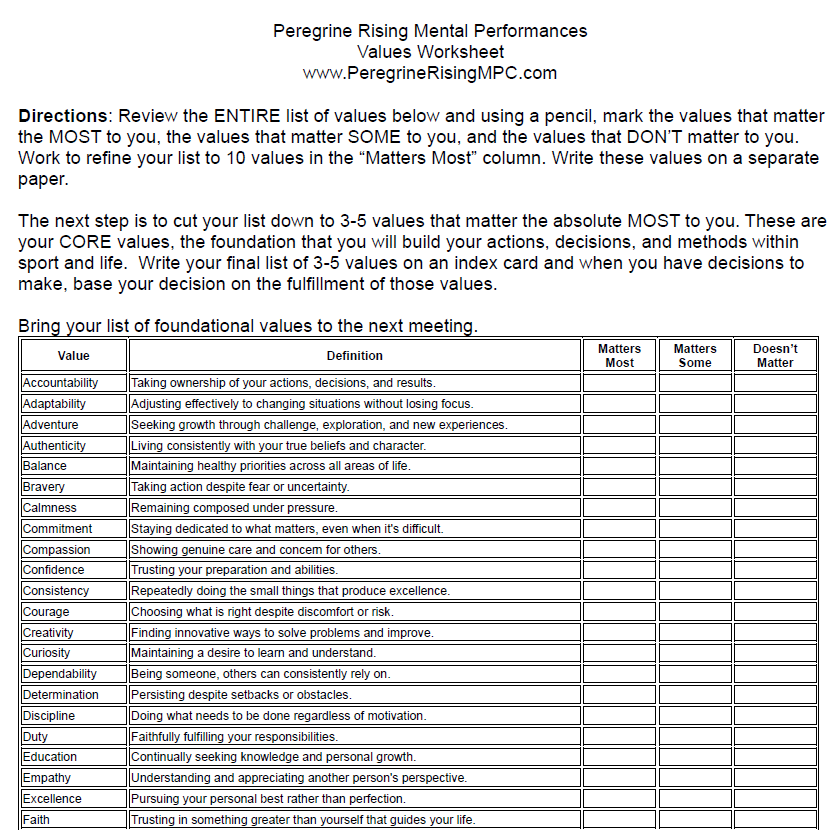
This worksheet is designed to help you develop and list out your core values. It includes a list of defined values, simple steps to follow, two journal prompts to understand how the values apply to your different roles in life, and a decision matrix to help you make values based decision. I use this with my athletes and I recommend it to coaches, parents, and athletes alike.
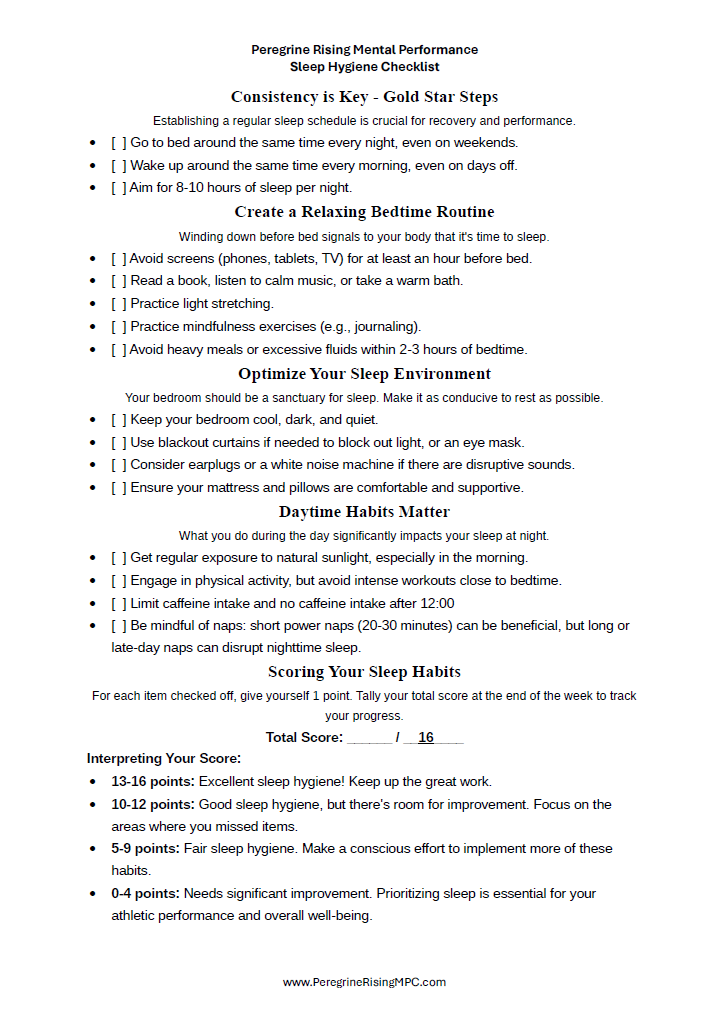
One of the biggest improvers of physical and mental performance is good quality and consistent sleep. Telling an athlete to “go sleep better” isn’t helping unless there is actionable guidance. This checklist is a simple checklist that athletes can print out and use to quantify the steps they take to support their sleep. By tracking this score they can have quantitative data to see how their habits have changed and how they have been benefiting performance and recovery.
This is a gree resource to help you, or your athlete(s). When you hit Add to Cart you will go through the usual purchasing process but be offered a secure method for downloading this resource.

A coaching guide with a progression model to help young baseball and softball players overcome their fear of being hit by a pitch. This coaching guide is designed to help you get your transition athletes, from coach pitch or machine pitch to kid pitch, comfortable in the batter box. It is about building comfort, competence, and courage.

This is a worksheet for athletes and coaches to use for return to sport athletes. There are a lot of fears when returning after a major injury and having a way to document all those strange feelings, noises, and pains so that they can be reviewed with a physical therapist can help calm the mind. There’s no longer a need to try and remember and describe past events, carry a stack of these worksheets and be able to discuss your conerns easily with your physical therapist.
Many times the feelings and pains after returning to sport are common and a physical therapist can calm the nerves of athletes by addressing each of the incidents.
While this is called the “Return to sport” Pain Awareness worksheet, it can be used for any athletes to help document situations so that physical therapists, doctors, and emergency personnel can treat effectively and properly.
No results match your search. Try removing a few filters.